
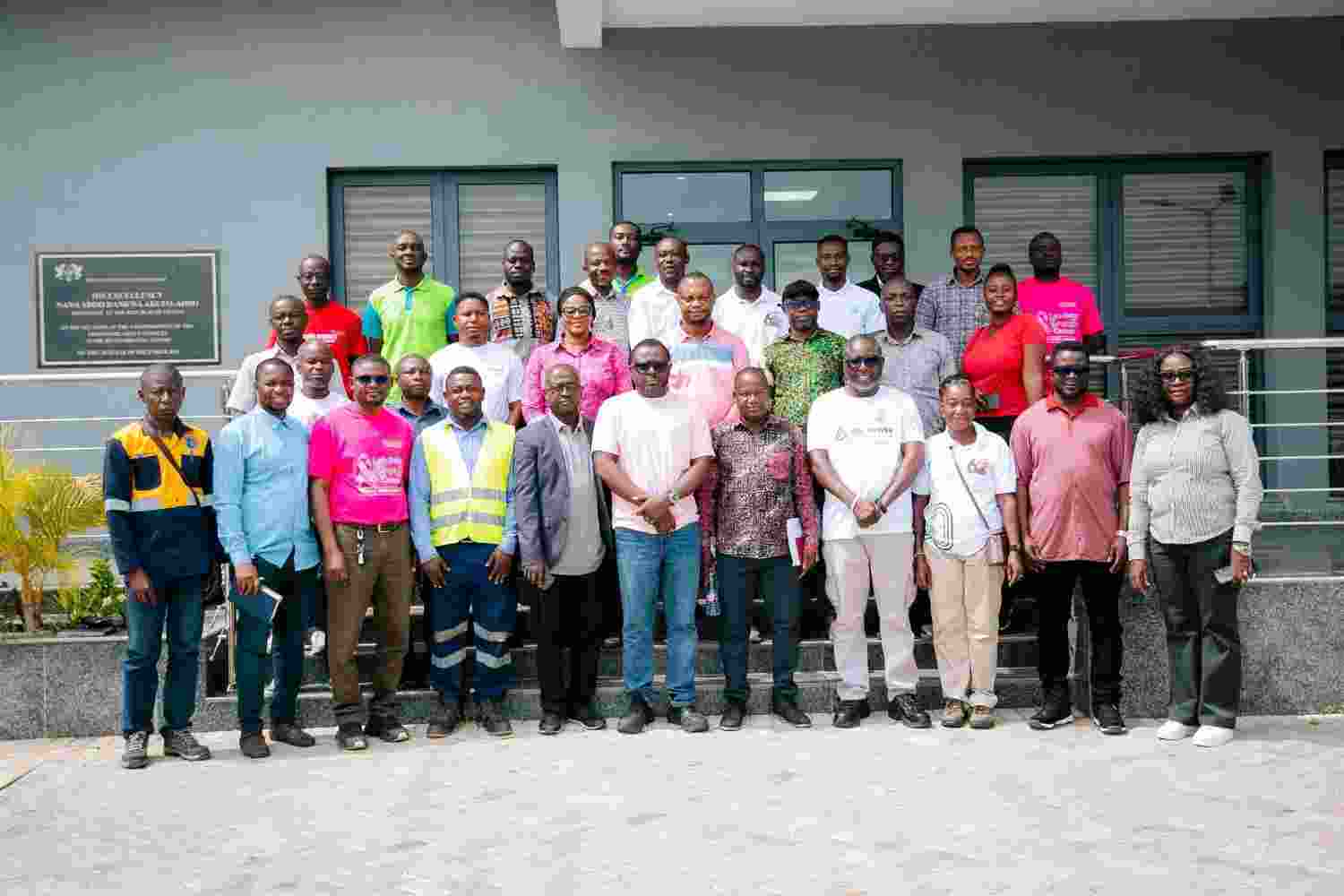
Sunyani Technical University (STU) and the Bui Power Authority (BPA) are exploring opportunities to deepen their institutional partnership in energy research, technical skills development, industrial training and community development.
The initiative is aimed at strengthening academia-industry collaboration to produce industry-ready graduates equipped with the practical skills and competencies required to meet the needs of Ghana’s energy sector.
The Pro-Vice Chancellor of STU, Ing. Prof. Julius Caesar Puoza, made this known during a working visit by a delegation from the University to the BPA at Bui in the Banda District of the Bono Region on Friday, October 30, 2026.
He said STU was committed to building a structured, long-term partnership with the BPA to align academic training with industry requirements and contribute to national development.
Appreciation
Ing. Prof. Puoza expressed appreciation to BPA for its continued support to the University, particularly through its Educational Scholarship Scheme, which currently supports 14 STU students pursuing Bachelor of Technology programmes in Information and Communication Technology (ICT), Electrical and Electronics Engineering, Environmental and Safety Engineering, and Construction Technology.
He also commended the Authority for providing industrial attachment opportunities to STU students and its contribution to Ghana's energy supply through hydro and solar power generation.
Proposals
He proposed regular institutional engagements, including annual meetings and joint committees, to sustain the partnership and facilitate collaboration in research, innovation and knowledge exchange.
On research and innovation, the Pro-Vice Chancellor identified renewable energy, environmental sustainability, occupational safety and community development as potential areas for joint research initiatives.
He further proposed staff exchanges, guest lectures, industry-led seminars and opportunities for BPA engineers to provide practical tutorials to STU students, while encouraging the Authority to contribute to curriculum development and review to ensure that academic programmes respond to emerging industry demands.
Opportunities
Ing. Prof. Puoza also highlighted opportunities for the University to support BPA's community development initiatives through apprenticeship training and certification, STEM education programmes for children in the Authority's catchment communities, and technical support for the implementation and monitoring of community development projects.
He expressed STU's readiness to provide specialised research and laboratory services, including environmental monitoring and biodiversity studies around the Bui Dam.
Infrastructure dev’t
Touching on infrastructure development, he appealed to BPA to consider supporting the construction of a hostel facility on the STU campus to help address accommodation challenges facing students.
He also invited the management of BPA to visit the University for further discussions towards formalising and strengthening the proposed areas of collaboration.
Welcoming the delegation, the Director of the Renewable Energy Department of BPA, Ing. Peter Acheampong, assured the University of the Authority's preparedness to explore the proposed areas of partnership.
He said he would present the requests and proposals to BPA management for consideration and further discussions.
Industrial attachment
On opportunities for industrial attachment, Ing. Acheampong indicated that the Authority was willing to accommodate more STU students for practical training but explained that limited accommodation facilities at Bui remained a major constraint.
He, however, said the Authority would have no difficulty accepting additional students who could make alternative accommodation arrangements in nearby communities.
Ing. Acheampong further assured the delegation that experienced BPA engineers would be available to periodically collaborate with STU lecturers by providing practical tutorials on campus to expose students to current industry practices, technologies and requirements.
The proposed partnership is expected to strengthen the relationship between the two institutions while creating opportunities for practical training, research, innovation and the development of skilled human resources for Ghana's energy industry.