
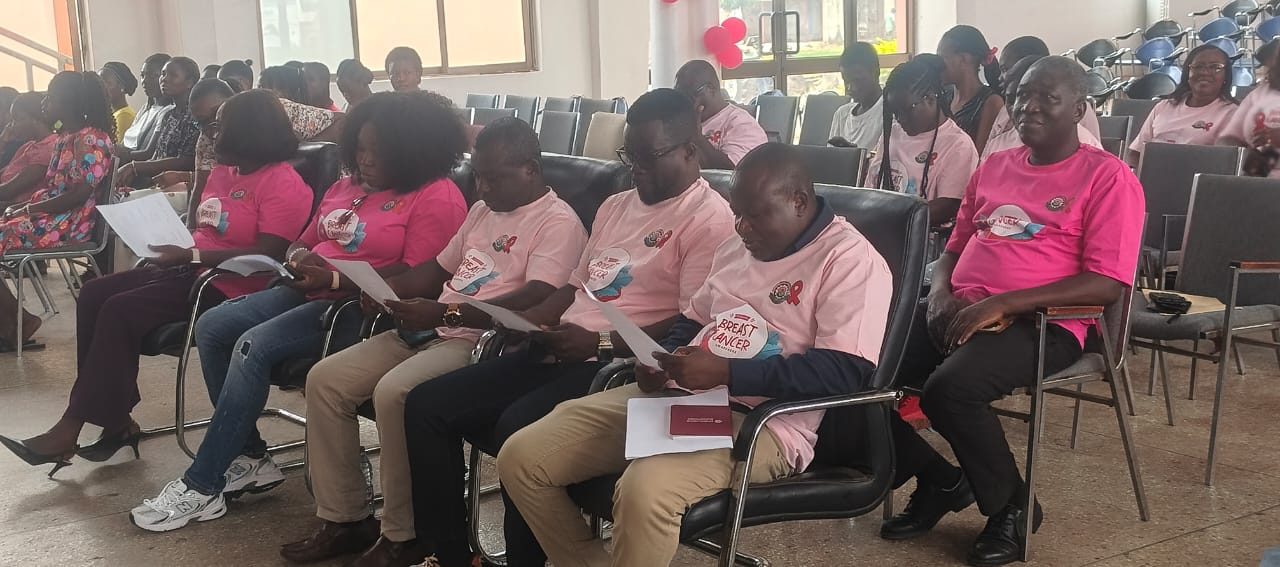
Sunyani Technical University (STU) is organising a three-day breast cancer awareness and screening seminar to promote early detection and encourage regular health checks among members of the university community.
The seminar, which runs from October 27 to 29, 2026, is being organised by the Department of Persons with Disabilities, Equity-Inclusivity and Gender Mainstreaming in collaboration with the University Health Service.
Spearheaded by Mrs Cynthia Gyamfi Adu-Gyamfi, the Head of the PWD/Equity-Inclusivity and Gender Mainstreaming Office, the programme brought together university management, faculty members, administrative staff and students.
Among those present at the opening session of the seminar were the Pro Vice-Chancellor, Prof. Julius Caesar Puoza; Registrar, Mr Stephen Yeboah; Director of Finance, Mr Thomas Kwarfo; deans, heads of departments, lecturers and other university officials.
In his opening remarks, Prof. Puoza underscored the importance of prioritising personal health and urged both men and women to take proactive steps to protect their well-being through regular medical checks and early screening.
The resource person, Dr Akosua Twenewaa Otchere-Peprah, educated participants on breast cancer, describing it as a disease characterised by the abnormal growth of cells in breast tissue.
She cited global statistics indicating that approximately 2.4 million new cases of breast cancer were diagnosed in 2024, resulting in about 697,000 deaths worldwide.
Dr Otchere-Peprah explained that breast cancer risk factors include family history, genetic predisposition, hormonal influences and certain hormonal medications. She encouraged participants to understand the risks and seek appropriate medical advice.
She cautioned against assuming that breast cancer always presents as a lump, explaining that other warning signs could include changes in the skin around the nipple, breast redness, nipple inversion and other unusual changes in the breast.
She also clarified that not every breast lump is cancerous, urging individuals who notice unusual changes to seek prompt medical assessment rather than rely on self-diagnosis.
The resource person stressed that breast cancer can be treated, with treatment options depending on the type and stage of the disease. These may include surgery, chemotherapy and radiotherapy.
She further outlined the three main approaches to breast examination: breast self-examination, clinical breast examination by a health professional, and diagnostic examination where medically indicated. Participants were encouraged to remain vigilant and seek professional evaluation of any suspicious changes.
Dr Otchere-Peprah noted that October is recognised globally as Breast Cancer Awareness Month, providing an opportunity to intensify public education, promote screening and encourage early diagnosis.
The seminar concluded with a call on both men and women to prioritise breast health, seek timely medical attention and support efforts to increase awareness of the disease.